A competitor can hold the top organic ranking, run the bigger ad budget and still lose the recommendation that matters. When a buyer asks ChatGPT, Gemini or Perplexity which provider to choose, the answer can favour a brand that is barely visible in traditional search. How to benchmark AI competitors gives your team a clear view of who owns the answer, why they are being selected and where your brand can take ground.
This is not a vanity-reporting exercise. AI visibility affects consideration before a prospect reaches your site, fills in a form or speaks to sales. The battle for the answer has begun, and a useful benchmark turns that battle into a measurable operating plan.
What an AI competitor benchmark should measure
Traditional competitor analysis starts with rankings, backlinks, traffic estimates and paid search. Those signals still matter, but they cannot explain how generative engines frame a category. AI platforms synthesise information from multiple sources, interpret user intent and often recommend a short list of brands rather than serving a page of blue links.
Your benchmark needs to show presence, prominence and perception. Presence is how often your brand appears in relevant AI responses. Prominence is whether it is the lead recommendation, a passing alternative or absent altogether. Perception is the language the model associates with your business: trusted, affordable, specialist, enterprise-ready, difficult to use, or something worse.
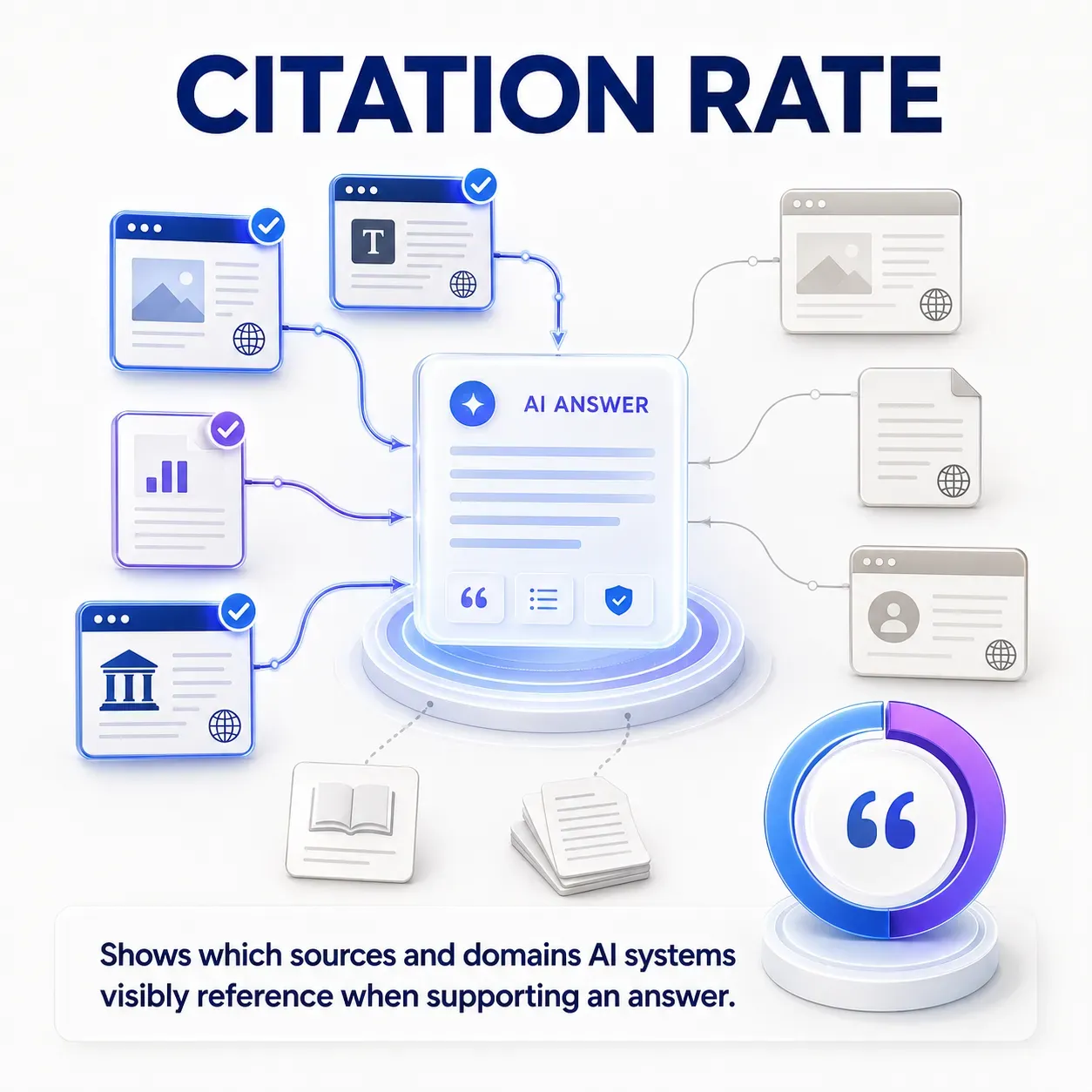
Track four core measures together: AI share of voice, mention frequency, citation rate and sentiment. AI share of voice reveals the proportion of tracked answers in which each brand appears. Mention frequency tells you how consistently a brand enters the conversation. Citation rate shows which sources and domains AI systems visibly reference when they support an answer. Sentiment exposes whether visibility is working in your favour.
A competitor mentioned in 60 per cent of responses with favourable framing is a more urgent threat than one that appears occasionally but attracts a lot of conventional search traffic. Context matters.
How to benchmark AI competitors with a fair prompt set
The quality of the benchmark depends on the questions you test. Random prompts create random conclusions. Start with the decisions real customers make across awareness, evaluation and purchase.
For a B2B software company, that may include category prompts such as “best project management software for construction teams”, comparison prompts such as “Asana vs Monday for a growing agency”, and problem prompts such as “how can an agency reduce client reporting time”. For a local or service business, include location and use-case language that mirrors customer demand.
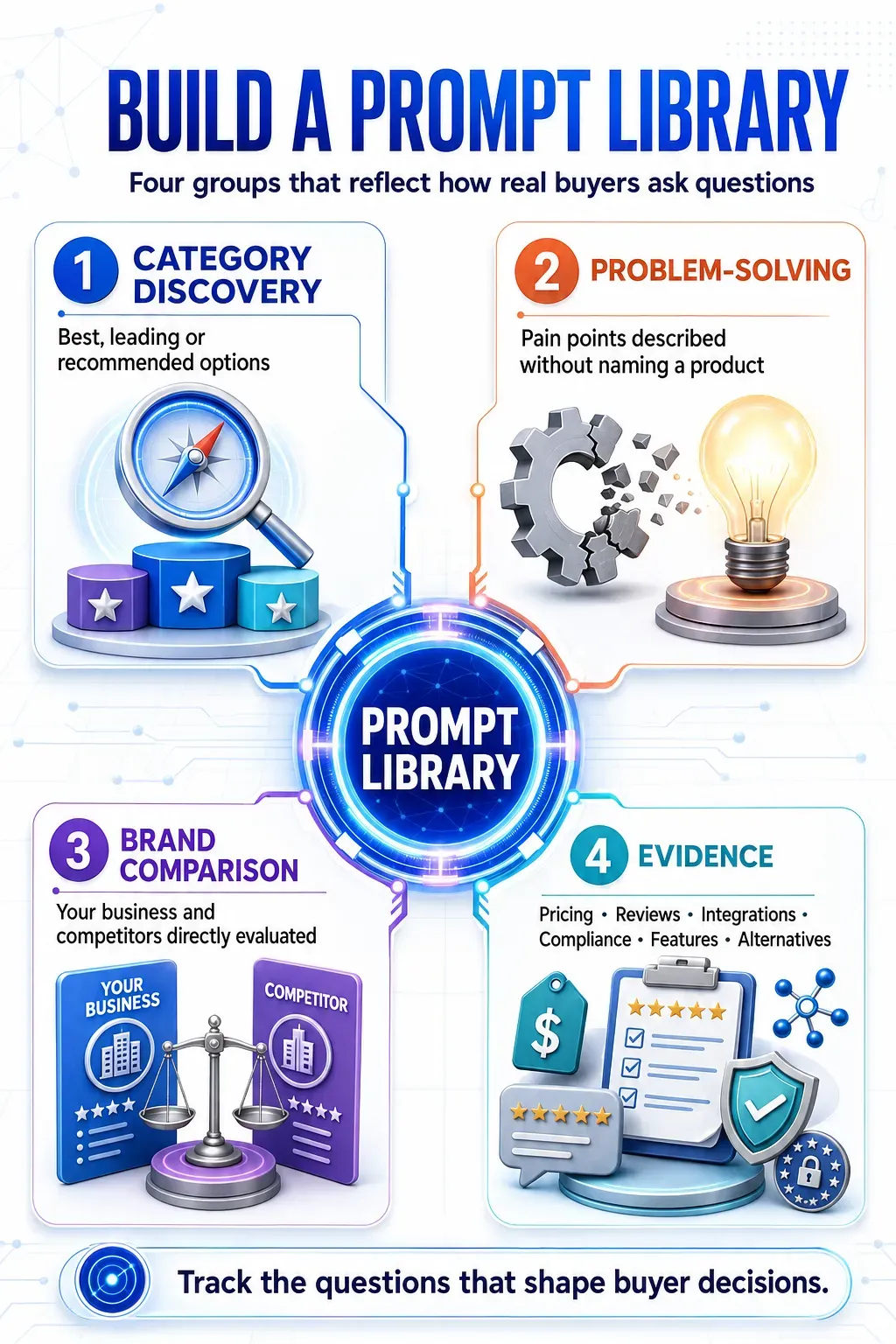
Build a prompt library around these four groups:
- Category discovery prompts, where buyers ask for the best, leading or recommended options.
- Problem-solving prompts, where the buyer describes a pain point without naming a product.
- Brand comparison prompts, where your business and competitors are directly evaluated.
- Evidence prompts, where users ask for pricing, reviews, integrations, compliance, features or alternatives.
Include prompts at different levels of specificity. Broad queries reveal category leadership. High-intent queries reveal whether you show up when a buyer is closest to acting. Branded comparison queries reveal who has shaped the market narrative.
Use the same prompt wording, market and testing cadence for every brand. If your company is assessed on 100 prompts and a competitor is assessed on 20 favourable prompts, the result is not a benchmark. It is a sales pitch. Run the set repeatedly because model outputs can shift with platform updates, fresh source material and prompt context.
Measure each platform separately before combining results
There is no single “AI search” result. ChatGPT, Claude, Gemini, Perplexity and Google AI Overviews have different product designs, source behaviours and citation patterns. A brand can dominate Perplexity through strong, frequently cited editorial coverage while receiving little visibility in Google AI Overviews. Combining all platforms too early hides exactly the gap you need to fix.
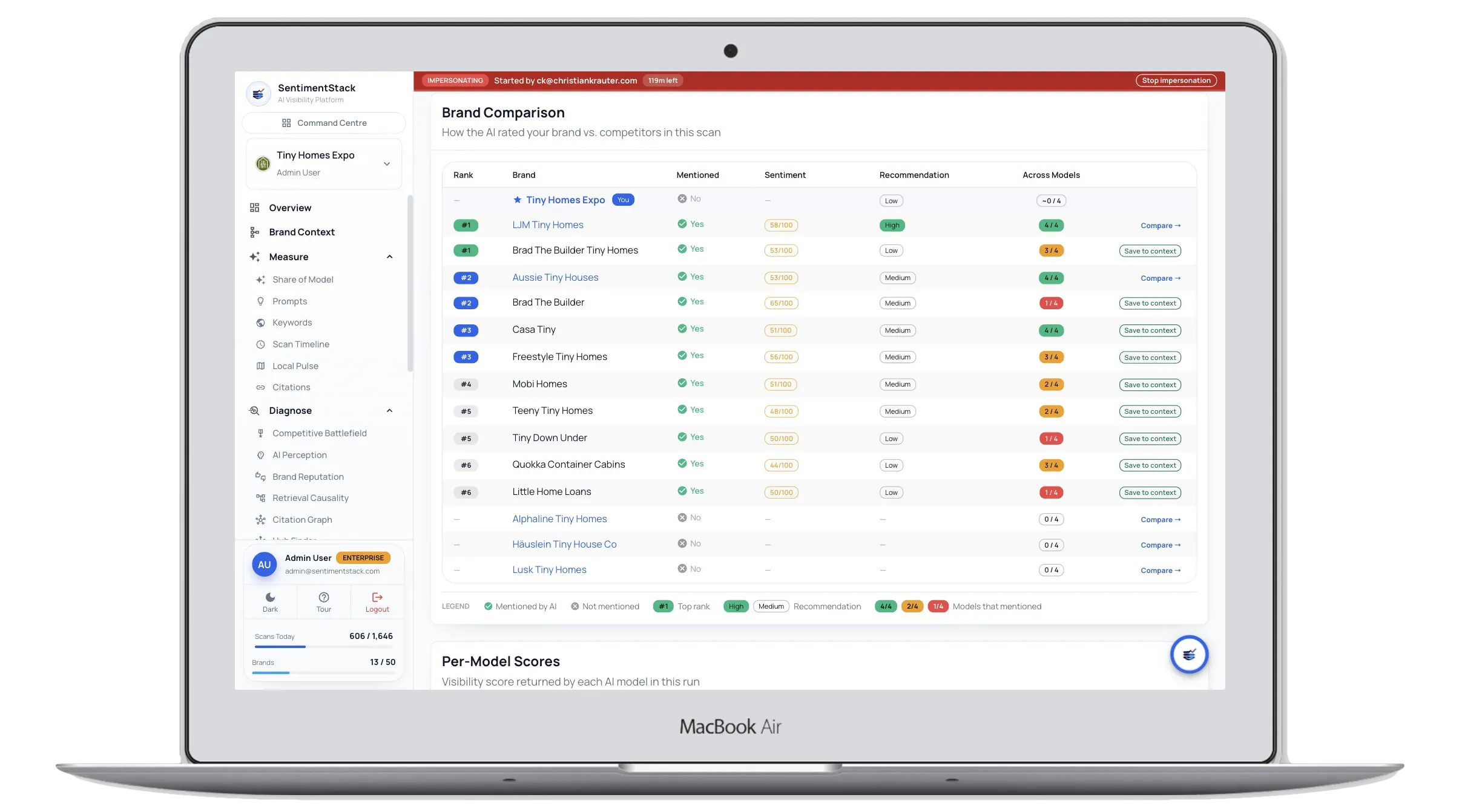
Create a platform-level scorecard first. Record whether each brand was mentioned, where it appeared in the answer, whether it was recommended, the sentiment of the wording and any visible citations. Then calculate an overall view weighted by the platforms that matter most to your audience.
A consumer brand may prioritise Google AI Overviews and Gemini because of their connection to search behaviour. A B2B technology company might put more weight on ChatGPT, Claude and Perplexity if those tools feature heavily in research workflows. There is no universal weighting. Base yours on customer behaviour, referral trends and commercial value.
Also separate a mention from a recommendation. “Company X is one option” and “Company X is the best choice for mid-market teams” should not receive the same score. Position in the response matters because generative answers compress the buyer’s shortlist.
Find the reason competitors are winning
Once the numbers expose a gap, inspect the evidence behind it. The goal is not to copy a competitor’s content calendar. It is to identify the information ecosystem that makes their brand easy for AI systems to understand and support.
Look for recurring sources that appear beside competitor mentions. They may have authoritative category pages, comparison content, documentation, independent reviews, analyst coverage, partner listings or expert commentary that answers the exact questions buyers ask. Their product may also be described more consistently across the web, giving models clearer signals about who they serve and where they fit.
Pay close attention to attributes, not only names. If a competitor is repeatedly described as “best for enterprise compliance” or “the affordable choice for small teams”, that is strategic positioning being reproduced inside AI answers. Your content may be technically accurate yet invisible if it does not state your differentiated value clearly enough for both people and models to connect it to a use case.
Citation patterns need nuance. Some platforms display sources more openly than others, and a citation is not always proof of causation. Still, repeated source associations are a strong clue. Treat them as a research lead, then assess the quality, relevance and accessibility of the underlying content.
Turn benchmark gaps into a GEO action plan
A dashboard without action is just a more expensive spreadsheet. Prioritise opportunities where there is meaningful demand, a clear competitor advantage and a credible path to improve your information footprint.
Start with prompts where your brand is absent but competitors are consistently recommended. Match each gap to the missing asset or signal. You may need a focused use-case page, a genuinely useful comparison page, clearer product documentation, better structured FAQs, independent third-party validation or updated messaging across existing high-authority pages.
Do not publish generic “best software” articles simply because a competitor has one. If you cannot make a defensible case, the content will add noise rather than authority. Better results come from answering a specific buyer question with original evidence, clear eligibility criteria, practical examples and claims your business can substantiate.
Next, address negative or uncertain sentiment. If AI answers frame your product as expensive, limited or complex, find the source of the ambiguity. Sometimes the remedy is clearer pricing information or a stronger explanation of total value. Sometimes the product experience needs work. Benchmarking can reveal a marketing issue, but it should not be used to disguise an operational one.
Use an impact score to sequence work. Score each task by the prompt set’s commercial intent, current visibility gap, competitor strength, likely effort and the authority of the page or source you can improve. This keeps the team focused on winning valuable answers rather than chasing every mention.
Set a cadence that catches competitive movement
AI visibility changes faster than a quarterly ranking report. New content can alter citations, model updates can reshape answers, and a competitor’s campaign can suddenly establish them as the default choice in a valuable use case.
Review core metrics monthly and investigate material movement weekly for high-value categories. Keep a dated record of prompt outputs, source citations and messaging patterns so your team can distinguish a one-off variation from a sustained trend. A falling share of voice is not automatically a crisis, but it is a signal to check before the market narrative hardens.
For teams that need continuous platform-level tracking and prioritised recommendations, aigeo insights connects competitor visibility, sentiment, citations and AI share of voice to an optimisation roadmap. The important part is the workflow: measure the answer, diagnose the reason, improve the relevant asset, then test whether the market response changed.
The brands that win AI search will not be the ones producing the most content. They will be the ones that repeatedly prove, in the places generative engines rely on, why they deserve to be the answer.
Related Posts
- GEO Platform Review: What Teams Need to Track
Use this GEO platform review to assess AI visibility tracking, competitor intelligence and optimisation roadmaps before your brand loses the…
Read more about GEO Platform Review: What Teams Need to Track - AI Discoverability Is Now a Revenue Metric
AI discoverability determines whether your brand appears in the answers buyers trust. Measure visibility, fix gaps and win AI search…
Read more about AI Discoverability Is Now a Revenue Metric - How to Prioritise GEO Tasks That Drive Visibility
Learn how to prioritise GEO tasks with visibility, citation, sentiment and competitor data, so your team acts on work that…
Read more about How to Prioritise GEO Tasks That Drive Visibility