
A prospect asks ChatGPT for the best payroll platform for a growing business. Another asks Perplexity which agency understands B2B SaaS. A third uses Google AI Overviews to compare providers before they ever see a conventional results page. If your brand appears in the answer and earns the click, you have created one of the most valuable new acquisition signals in digital marketing: AI referrals.
These visits are not just another line in web analytics. They reveal whether generative engines consider your brand credible enough to recommend, cite or surface while users are making decisions. The battle for the answer has begun, and referral traffic from AI is one of the clearest commercial signals of who is winning it.
What are AI referrals?
AI referrals are website visits that arrive from generative AI platforms and AI-powered search experiences. They may come from a citation in Perplexity, a shared ChatGPT response, a link surfaced by Claude, a Gemini recommendation, or an AI Overview that sends a user through to your site.
The definition sounds simple. The measurement is not always simple. Some platforms pass identifiable referrer data, while others do not. A user may copy a URL from an AI answer into their browser, creating what appears as direct traffic. They may also encounter your brand in an answer, search for it later, then convert through organic search or paid media. That means reported AI referral sessions are valuable, but they are not the full picture of AI influence.
For growth teams, the useful question is not simply, “How much traffic did AI send?” It is, “Where are AI platforms introducing or validating our brand, which prompts trigger that visibility, and what commercial actions follow?”
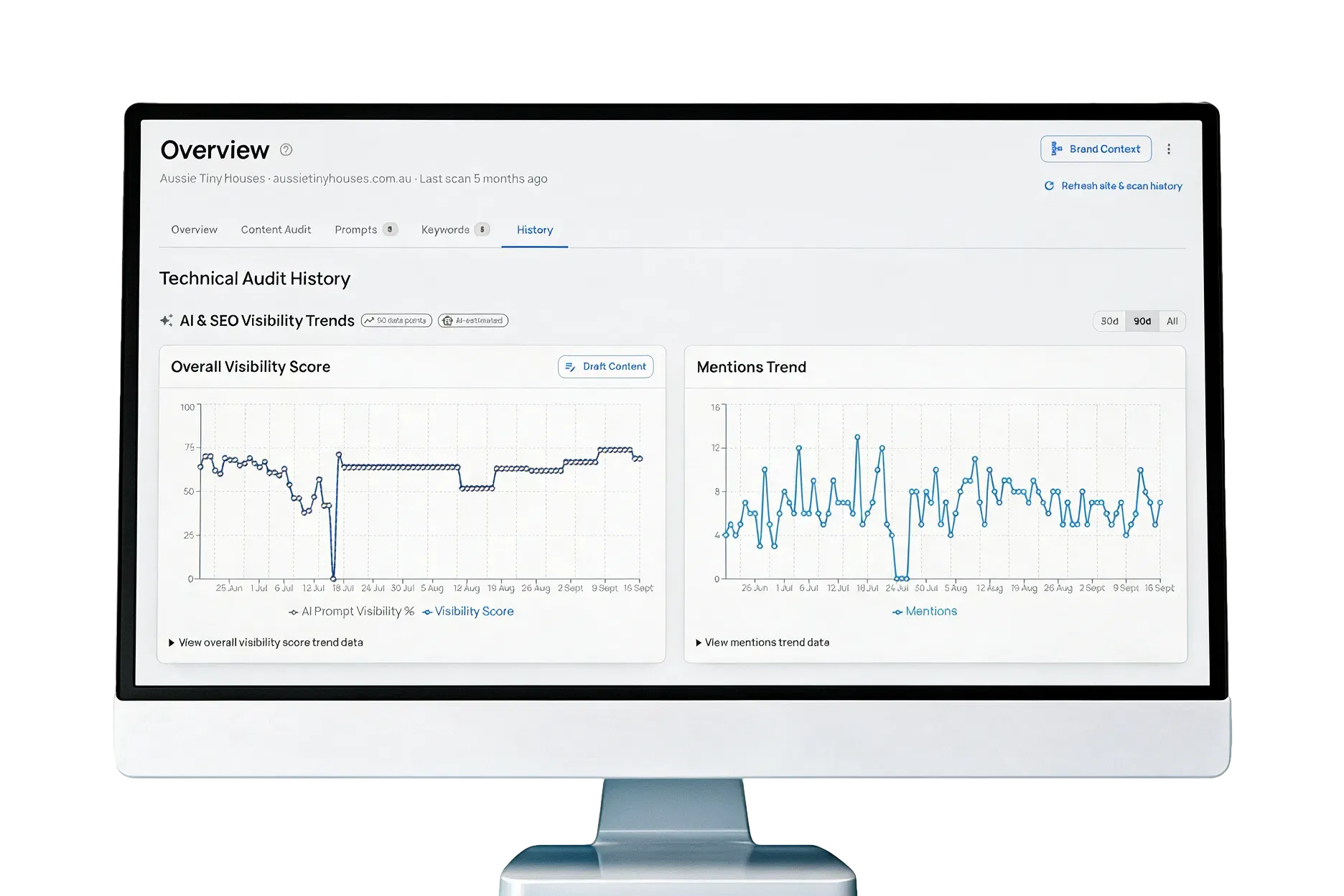
AI Referrals Sentimentstack Mentioning History Screenshot
Why AI referral traffic matters more than its volume
AI referrals can look small beside organic search, email or paid social, especially for brands early in their GEO programme. Dismissing them on volume alone is a mistake.
Generative platforms often sit closer to the decision point. People use them to narrow options, compare alternatives, solve a specific problem, assess expertise and look for proof. A visitor arriving after asking for “the best project management software for construction teams” carries a very different level of intent from someone casually browsing a broad category page.
This creates a familiar performance-marketing trade-off: lower volume can still produce higher-quality sessions. Track engagement, assisted conversions, demo requests, qualified leads, revenue and pipeline value alongside sessions. A handful of AI referrals that become sales conversations may matter more than hundreds of low-intent visits from another channel.
There is also a strategic dimension. AI referrals are evidence that a platform selected your content or brand from a crowded set of available sources. That selection can build preference before a prospect reaches your website. If a competitor is consistently named while you are absent, the loss is not merely traffic. It is a loss of consideration.
The gap between AI mentions and AI referrals
A brand does not need to receive a click to benefit from visibility in an AI response. It may be mentioned as a leading provider, included in a comparison, quoted as an expert source or positioned as the safe choice for a particular use case. These impressions influence the market even when analytics cannot tie them to a session.
That is why referral reporting alone is insufficient. It measures the clicks an AI environment exposes, not the total share of voice your brand earns inside generated answers.
A practical measurement system combines two views. Web analytics tells you what is reaching your site and what visitors do next. AI visibility tracking tells you whether your brand is mentioned, cited, recommended and discussed favourably across the prompts that matter to your buyers. Together, they show both the outcome and the mechanism.
For example, a software company might see strong AI referral conversion from Perplexity but weak overall mention frequency in ChatGPT and Gemini. That does not call for a generic content sprint. It calls for a targeted plan: preserve the sources generating commercial visits, then improve the evidence and content structure that make the brand easier to retrieve in the platforms where competitors own the conversation.
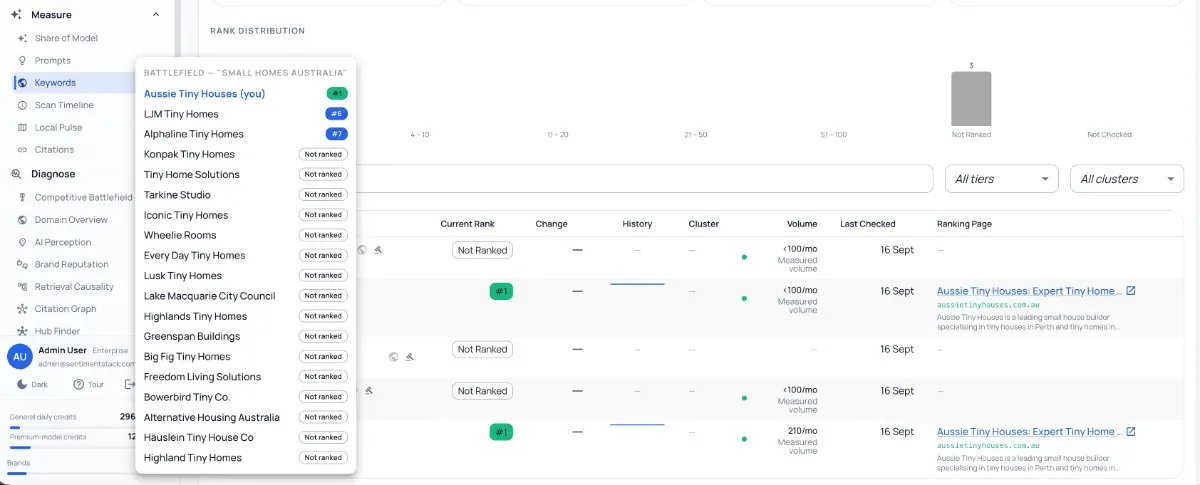
AI Referrals: SentimentStack Screenshot Rank Distribution
How to measure AI referrals without misleading yourself
Start by creating a dedicated AI referral channel in your analytics reporting. Group recognised generative platform domains where referrer data is available, then review them separately from traditional search referrals. Do not bury these visits inside a catch-all referral bucket. They represent a different discovery behaviour and deserve their own baseline.
Next, measure quality. Sessions and users are useful, but they are early-stage metrics. Compare AI referral visitors against other channels for engaged sessions, key page views, return visits, enquiry starts, purchases, lead quality and assisted conversions. Use a sensible reporting window because AI-assisted research can lengthen the path to conversion, particularly in B2B and high-consideration categories.
Then map referral performance to specific landing pages. If most AI traffic lands on a research report, pricing page, comparison page or detailed service explainer, you have a clue about what AI systems and their users find useful. If visitors land on thin, generic pages and leave quickly, the citation may be winning the click but failing to meet the expectation created by the answer.
Finally, separate correlation from causation. A rise in branded search or direct traffic after improved AI visibility may be connected, but it is not automatically proof. Look for repeated patterns across queries, markets and time periods. Add self-reported attribution to forms or sales calls, asking prospects where they first heard about you. The evidence will never be perfect, but it will become directionally powerful.
Metrics that belong on the same dashboard
AI referral sessions should sit beside AI mention frequency, citation rate, AI share of voice, sentiment, competitor visibility and platform-level performance. These metrics answer different questions:
When these numbers move together, you can make a confident decision. When they conflict, investigate the prompt set, source content and landing-page experience before spending more budget.
How to increase AI referrals that can convert
The goal is not to force links from AI platforms. The goal is to become an answer-worthy source and a recommendation-worthy brand. That requires content built for real decision questions, not just keywords with search volume.
Start with the prompts your buyers use when they are comparing, selecting and validating. They may ask for the best option for a specific industry, a provider with a particular capability, alternatives to a market leader, costs, implementation considerations or proof that a solution works. Build pages that answer these questions directly, with clear claims supported by original evidence.
Specificity matters. AI systems have little reason to cite a page saying your team delivers “high-quality solutions”. They have more reason to use a page that explains who the offer is for, what it does, how it differs, what it costs, where it fits and what outcomes customers can reasonably expect. Clear headings, concise definitions, structured comparison information and credible first-party data make the content easier to interpret.
Authority beyond your own website also matters. Strong independent coverage, expert commentary, reputable reviews and consistent business information can reinforce the signals an AI system sees. But do not chase mentions for their own sake. A weak directory listing will not compensate for vague positioning or a website that cannot substantiate its claims.
Conversion still happens on your site. Make the page cited by AI useful on arrival. Match the promise of the likely prompt, state the next step clearly and remove unnecessary friction from forms, demos or purchases. AI can create the introduction; your digital experience must earn the result.
Where teams lose ground
The most common error is treating AI referral traffic as a novelty report rather than a competitive intelligence source. A monthly count of visits tells you very little if you cannot see which platforms, prompts, competitors and sources are driving the change.
Another mistake is publishing a high volume of generic AI-written content. More pages do not automatically create more citations. Repetitive content can blur your expertise, while unsupported claims may damage trust. Prioritise the gaps that affect revenue: comparison content where rivals are recommended, product pages that lack clear evidence, category questions where your brand is missing, and reputation issues appearing in AI responses.
Aigeo insights helps teams connect these signals through AI visibility tracking and an optimisation roadmap, turning platform-level findings into prioritised content and distribution work. That matters because speed is now a competitive advantage. When a rival gains answer share, waiting for a quarterly SEO review is too slow.
Build for influence, not just attribution
AI referrals will remain imperfectly attributable. Referrer data will change, user behaviour will vary, and many influential interactions will never appear neatly in an analytics channel. That is not a reason to ignore them. It is a reason to use a wider measurement model.
Track the clicks you can identify. Monitor the answers where buyers encounter your brand. Measure the commercial quality of the traffic that arrives. Then act on the gaps before your competitors turn AI visibility into a defensible advantage. The brands that win the answer economy will not wait for attribution to become perfect before they start earning the recommendation.
Related Posts
- How to Measure Brand Visibility in AI Search
Learn how to measure brand visibility across AI search, track share of voice, citations and sentiment, and turn visibility gaps…
Read more about How to Measure Brand Visibility in AI Search - Citation Tracking Platforms for AI Search
Citation tracking platforms show where AI engines source, mention and recommend your brand, then turn lost visibility into a clear…
Read more about Citation Tracking Platforms for AI Search - Answer Engine Analytics: Measure What AI Says
Answer engine analytics shows where AI mentions, cites and recommends your brand, so your team can act before competitors take…
Read more about Answer Engine Analytics: Measure What AI Says