
A prospect asks ChatGPT for a supplier, Gemini compares options, and Perplexity cites three sources. Your brand may shape the answer, appear in it, or lose the recommendation entirely. The best AI referral analytics software does more than report a growing trickle of visits from AI tools. It shows where AI platforms send traffic, how that traffic behaves, whether your brand is being cited, and what to change before a competitor becomes the default answer.
For Australian growth teams, this is no longer a niche reporting exercise. AI referrals are often low-volume but high-intent. Someone arriving after asking an AI assistant for the best payroll platform, agency, legal adviser or SaaS tool has already done much of their research. If your reporting only labels that session as direct traffic, or treats every generative platform as one source, you are missing a critical competitive signal.
What the best AI referral analytics software needs to measure
AI referral analytics sits at the intersection of web analytics, attribution and Generative Engine Optimisation. A useful platform must separate these layers rather than pretending one metric answers every question.
First, it needs to identify referral traffic accurately. Visitors may arrive from ChatGPT, Perplexity, Gemini, Claude, Copilot, Google AI Overviews or another AI interface. Some referrals include clear source information. Others are obscured by browser privacy settings, app hand-offs or copied links. Good software makes its attribution logic visible, so your team understands what is observed directly and what is modelled.
Second, it needs to measure quality, not just sessions. A spike in AI traffic means little if visitors bounce, fail to reach key product pages or never become leads. Track engaged sessions, conversion rate, assisted conversions, pipeline value and revenue where your CRM data permits. For ecommerce brands, that may mean purchases and average order value. For B2B teams, it is more likely to mean demo requests, qualified leads and opportunities created.
Third, it should reveal the visibility that happened before the click. Many AI answers mention brands without linking to them. That mention can influence a buyer who later searches for your name, visits directly or converts through another channel. Referral reporting alone cannot explain this behaviour. The right setup pairs traffic data with AI mention frequency, citation rate, sentiment, AI share of voice and competitor comparisons.
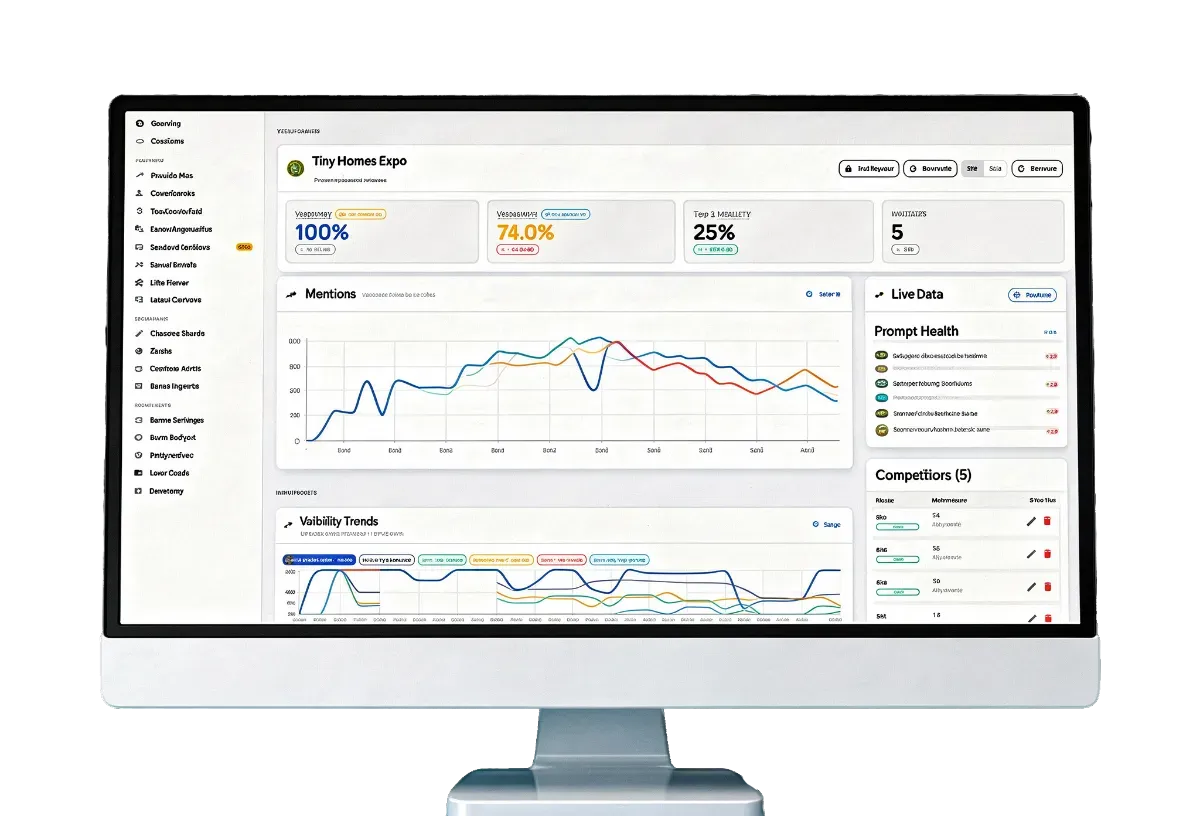
AI referral analytics software is not one product category
The market can look confusing because several software categories claim to solve the problem. They do different jobs, and the best choice depends on the decision you need to make.
Web analytics platforms answer the traffic question
Platforms such as Google Analytics 4 are the starting point for most organisations. They can surface known referral sources, show landing pages, and connect AI-driven sessions to on-site conversion events. They are useful because they sit close to your existing acquisition and conversion data.
Their limitation is context. Web analytics can tell you that traffic came from a referrer, but it usually cannot tell you the prompt that influenced the visit, whether an AI platform mentioned your competitor instead, or why one source sent stronger prospects than another. It can also undercount AI-originated journeys when referral data disappears between apps and browsers.
Product and behavioural analytics answer the experience question
Product analytics tools are valuable for SaaS teams that need to understand what AI-referred users do after arrival. Do they activate faster? Do they invite teammates? Do they retain better than paid-search visitors? Session replay and behavioural analysis can expose friction on the path from AI answer to conversion.
This category is most useful after traffic reaches meaningful volume or when your product journey has several steps. It is less suited to monitoring whether AI systems recommend your brand in the first place.
GEO platforms answer the visibility question
Generative Engine Optimisation platforms monitor how brands appear across AI-generated responses. They track prompts, citations, recommendations, sentiment and competitor presence across systems such as ChatGPT, Claude, Gemini, Perplexity and Google AI Overviews.
This is the missing layer for teams competing in the answer economy. If your referral volume falls, a GEO platform can help determine whether AI tools stopped citing your content, started favouring a rival, changed their source mix, or simply sent users to a different page. A platform such as aigeo insights goes further by turning visibility findings into prioritised content and distribution actions, rather than leaving teams with a dashboard and no next move.
Attribution platforms answer the commercial question
Multi-touch attribution tools connect marketing interactions to pipeline and revenue. For larger organisations with long sales cycles, they can show whether AI referrals assist deals even when they are not the final recorded source.
The trade-off is implementation effort. Attribution models depend on clean campaign governance, CRM discipline and agreement about what counts as influence. If those foundations are weak, adding another platform will create more arguments than insight.
How to choose the best AI referral analytics software
Do not select a platform because it has added an AI traffic filter. Assess whether it gives your team a reliable operating system for finding, interpreting and acting on AI demand.
Start with source coverage. The software should identify major AI referrers individually wherever technically possible, rather than grouping them under a vague category. It should also let you compare AI referral performance with organic search, paid media, email and direct traffic. A channel only looks promising when you can judge it against the alternatives.
Then examine conversion depth. Can you see the landing pages that attract AI-referred visitors? Can you connect those visits to form completions, purchases, trials, booked meetings or revenue? Can you segment performance by location, device, new versus returning visitor, or campaign? Australian businesses selling internationally should be especially careful here, because AI visibility and referral behaviour can vary significantly by market.
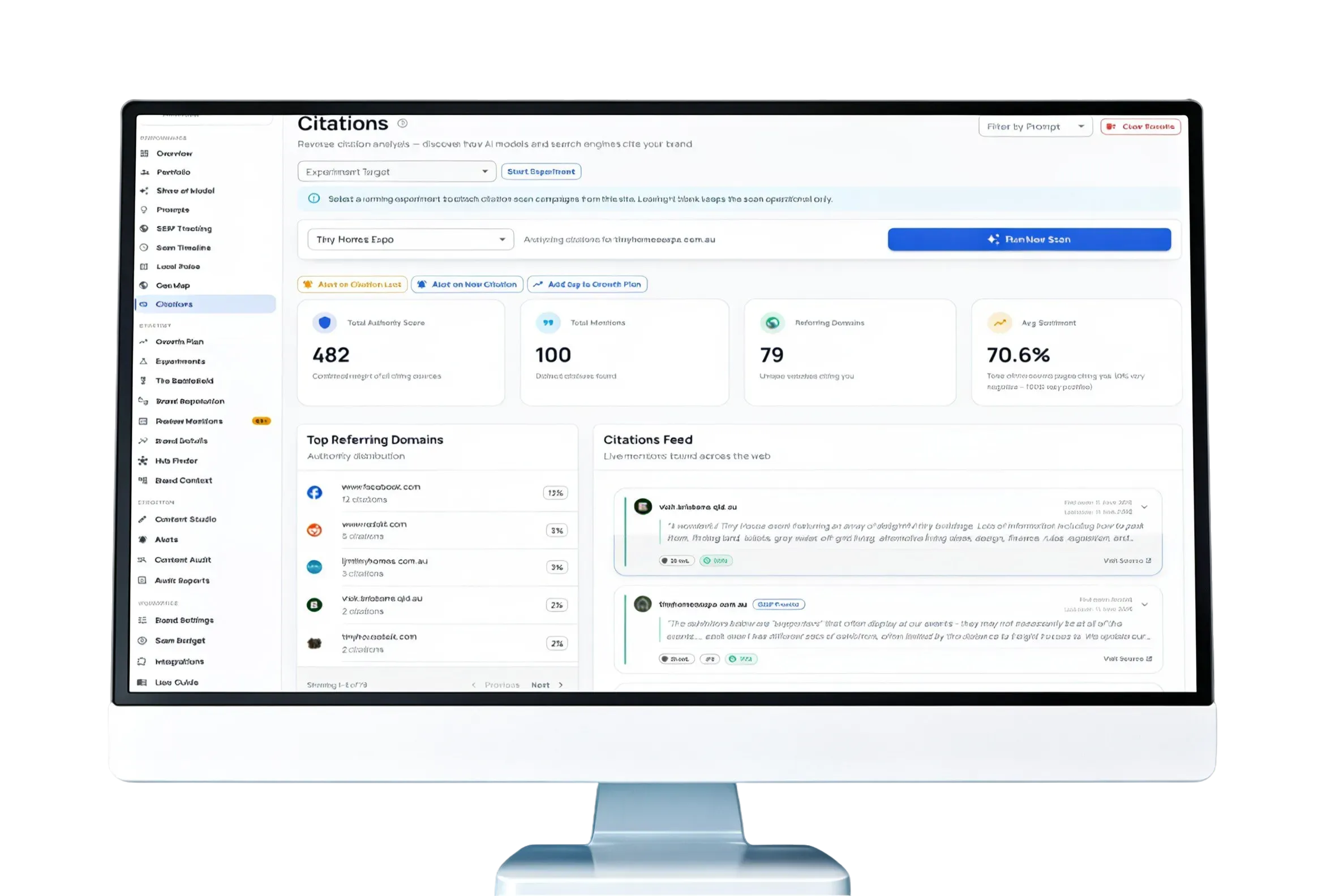
Evaluate visibility intelligence separately. Look for prompt-level tracking, citation monitoring and competitor benchmarking. The important question is not only, “Did AI send us traffic?” It is, “For which high-value buyer questions are we present, absent or losing ground?” A platform that tracks your brand name alone will not expose the broader category prompts where buyers make their shortlist.
Finally, test actionability. Your dashboard should point to a decision: refresh a weak comparison page, publish expert evidence, clarify structured information, improve a cited resource, or respond to a competitor gaining share of voice. Reporting that produces no prioritised action becomes another monthly slide deck.
When comparing tools, use a short proof-of-value period and assess five capabilities:
Build a measurement model before you buy
Software cannot fix unclear measurement. Define the outcomes that make AI visibility commercially valuable before configuring reports. For a B2B software company, this could be qualified demo requests and pipeline influenced. For a local service business, it may be calls, quote requests and suburb-level visibility. For an agency, it may be inbound briefs from buyers researching specialist capability.
Create a baseline for AI referrals, branded search, direct traffic and organic conversions. Then monitor changes alongside AI share of voice and citation rate. This matters because an increase in AI mentions may show up first as branded demand, not as a neat referral line in analytics.
Your reporting cadence should match the speed of the market. Weekly monitoring helps catch sudden competitor gains or lost citations. Monthly reviews are better for deciding which content themes, proof points and distribution efforts deserve more investment. Do not overreact to one prompt or one low-volume referral source. Look for repeated patterns across commercially meaningful questions.
When one tool is enough, and when it is not
A smaller business with limited AI referral traffic may only need web analytics configured well, plus a focused AI visibility tracker. That combination answers the essential questions without burdening the team with enterprise attribution complexity.
A mature growth team usually needs a connected stack. Web analytics measures observed visits. CRM and attribution data measure commercial impact. GEO monitoring measures representation inside AI answers. Product analytics explains whether referred users find value after landing. Each layer has a job, and none should be mistaken for the whole picture.
The real risk is waiting for AI referrals to become large enough to feel urgent. By that stage, competitors may already own the prompts that shape buyer consideration. Start measuring now, identify the questions that lead to revenue, and make every visibility gap a concrete growth task. The battle for the answer is already under way.
Related Posts
- AI Referrals: The New Measure of Search Demand
AI referrals show which generative platforms send qualified visitors to your brand. Learn how to measure, improve and defend this…
Read more about AI Referrals: The New Measure of Search Demand - Citation Tracking Platforms for AI Search
Citation tracking platforms show where AI engines source, mention and recommend your brand, then turn lost visibility into a clear…
Read more about Citation Tracking Platforms for AI Search - How to Map Brand Entities for AI Search Visibility
Learn how to map brand entities, connect the signals AI uses, find gaps and build a stronger path to citations,…
Read more about How to Map Brand Entities for AI Search Visibility