
A prospect asks ChatGPT for the best payroll platform, B2B agency, skincare brand or accounting firm in their category. Your company has strong SEO rankings, a capable product and years of market presence. Yet the response names three competitors and skips you entirely. That is why brands disappear from chatbots and it is rapidly becoming a revenue problem, not a curiosity for the search team.
Generative engines do not simply reproduce Google’s results page. They assemble an answer from signals across the web, their underlying training data, current sources, entity relationships and the wording of the prompt. A brand can be visible in traditional search while being effectively absent from the answer economy.
For Australian marketers, the stakes are rising fast. Buyers are using ChatGPT, Gemini, Claude, Perplexity and Google AI Overviews to shortlist providers before they ever visit a website. If your brand is not mentioned, cited or recommended at that moment, competitors have already shaped the consideration set.
Why do Chatbots not rank brands like search engines
Traditional SEO has trained teams to focus on rankings, clicks and landing-page traffic. Those metrics still matter. But a chatbot is usually trying to resolve a question, not present a catalogue of ten blue links.
When an AI assistant answers, it weighs whether it can confidently connect a brand to a specific need. It may look for clear descriptions of what the company does, credible third-party validation, consistent product information, topical expertise and evidence that the brand belongs in a given comparison. The model also has to decide whether a claim is sufficiently supported to include without creating a misleading answer.
That creates a different competitive battlefield. The question is not only, “Do we rank for this keyword?” It is, “When a buyer asks the category question, does the model recognise us as an appropriate answer?”
A high-ranking page can still fail this test. It may be thin, vague, heavily promotional or disconnected from the independent sources that AI systems use to validate claims. Conversely, a competitor with less organic traffic may be cited repeatedly because its category positioning is clearer and better corroborated.
Why brands disappear from chatbots
There is rarely one technical switch causing a brand to vanish. Usually, visibility has weakened across several signals that work together.
Your category association is unclear
AI cannot confidently recommend what it cannot classify. Many company websites lead with slogans, broad value statements or internal product language that means little outside the business. A visitor may eventually work out the offer. A generative engine needs stronger, more direct evidence.
If your pages do not clearly state the category, audience, use cases, differentiators and geographic relevance, models may struggle to connect your brand to a buyer’s prompt. This is especially common when businesses have expanded beyond their original service line but their site and third-party profiles still describe the old version of the company.
Clear positioning is not about stuffing category terms into every page. It is about creating consistent, factual language that makes the relationship between brand and buyer problem unmistakable.
The web has more evidence for your competitors
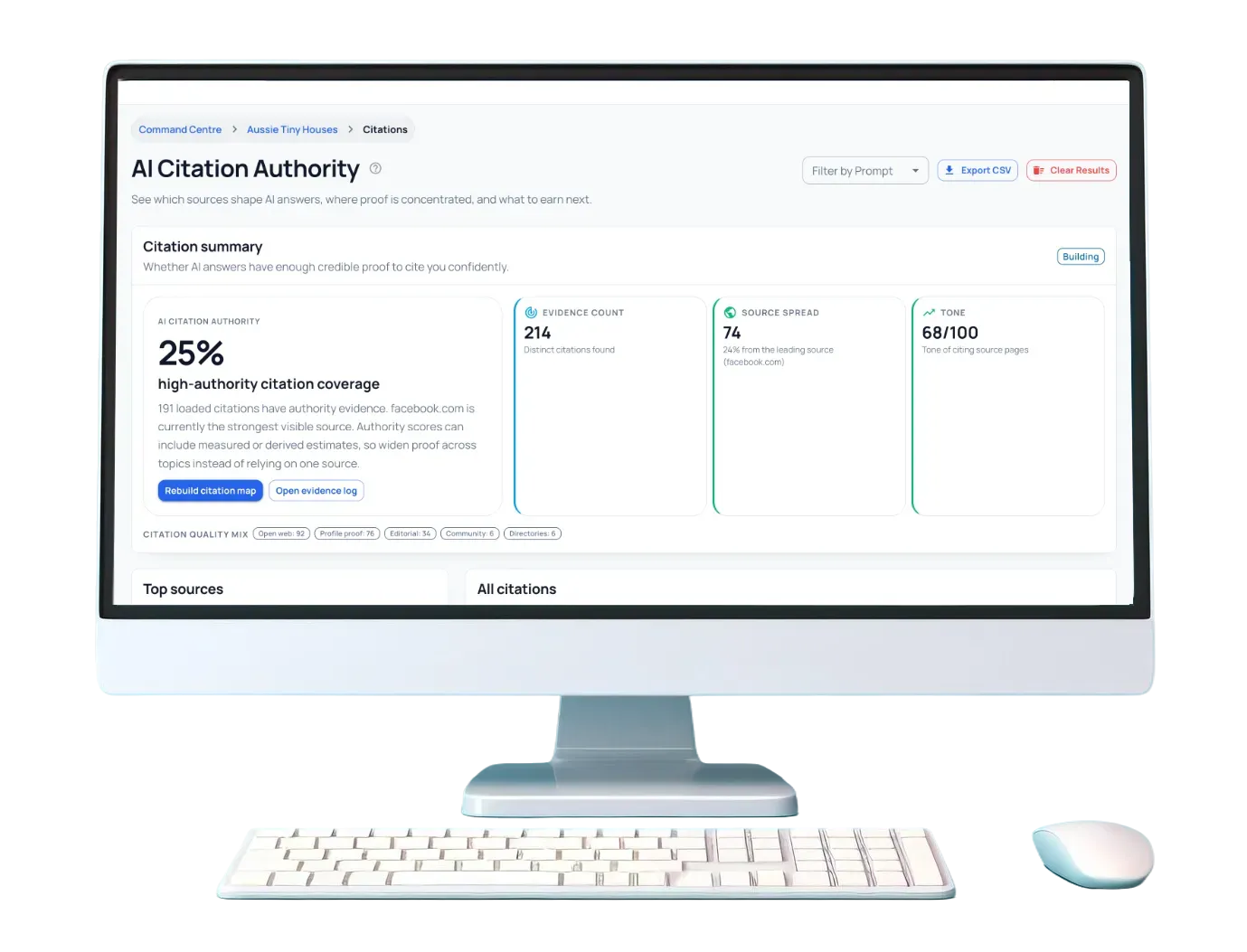
Chatbots learn confidence from corroboration. A competitor may appear in review platforms, industry publications, comparison articles, partner directories, expert commentary, customer case studies and discussion forums. Each mention does not carry equal weight, but together they form a recognisable entity footprint.
Your brand may have excellent owned content and still lose because the broader web provides too little independent confirmation. This is the uncomfortable trade-off in GEO: publishing more on your own domain helps, but it cannot fully replace credible external references.
For local businesses, inconsistent listings can make this worse. A different business description, old service area or mismatched name across profiles creates ambiguity. For enterprise brands, disconnected regional pages and outdated product documentation can do the same thing at scale.
Your content answers topics, not decisions
A generic blog post about an industry problem may earn traffic, but it may not help a model answer a commercial question. Chatbot prompts are often specific: which platform suits a 50-person business, which provider integrates with a particular stack, what is the best option for a regulated industry, or how do two vendors compare?
Brands disappear when their content does not address these decision points with enough substance. Thin comparison pages, unsupported superlatives and vague feature copy give models little to work with. Strong AI-visible content explains capabilities, limitations, ideal-fit customers, implementation requirements, pricing approach and relevant proof.
The goal is not to force a recommendation. It is to make accurate inclusion easy. A page that candidly explains who a product is not for can be more useful, and more credible, than one claiming to suit everyone.
How facts are fragmented or stale
AI responses are vulnerable to outdated product details, retired features, old pricing, inaccurate leadership information and conflicting claims. If a model encounters inconsistency, it may avoid naming the brand rather than risk a wrong answer.
This matters after mergers, rebrands, product launches and market repositioning. Teams often update the homepage first, then leave old help articles, PDF resources, partner listings and comparison pages untouched. From an AI perspective, the entity has become messy.
Regular content governance is now a visibility function. Audit the assets that define your brand, not just those that bring in visits. Ensure your company description, core offers, proof points and terminology align wherever buyers and models are likely to find them.
You are measuring rankings while AI share of voice moves
The most expensive visibility problem is the one nobody sees. A brand team may celebrate stable keyword rankings while competitors gain mention frequency and citation rate across generative platforms.
Chatbot visibility is prompt-dependent. You might appear for broad awareness prompts but disappear from high-intent comparison, alternative, pricing or use-case prompts. You may be recommended by one platform and ignored by another because each system retrieves, cites and frames evidence differently.
Without tracking a defined prompt set across the major engines, teams are relying on occasional manual checks. That is not a benchmark. It cannot show whether your share of voice is rising, whether sentiment has shifted, or which competitor has taken ownership of a valuable category question.
How to diagnose the gap before publishing more content
The wrong response is to launch a rushed wave of AI-themed articles. More content is only useful when it addresses the reason visibility is weak.
Start by mapping the questions that influence buying decisions. Include category prompts, comparison prompts, use-case prompts, alternatives, objections and location-specific questions where relevant. Then assess how often your brand is mentioned, whether it is cited, how it is described and which competitors appear in the same answers.
The language around your brand matters as much as the mention itself. Being named as a budget option when you sell enterprise capability, or as a legacy provider after a major repositioning, is not a clean win. Track sentiment and narrative attributes alongside visibility.
Next, inspect the sources behind competitor inclusion. Are they winning because of authoritative guides, review coverage, detailed documentation, partner ecosystems or clearer comparison pages? This reveals the gap between a vague visibility concern and an actionable optimisation plan.
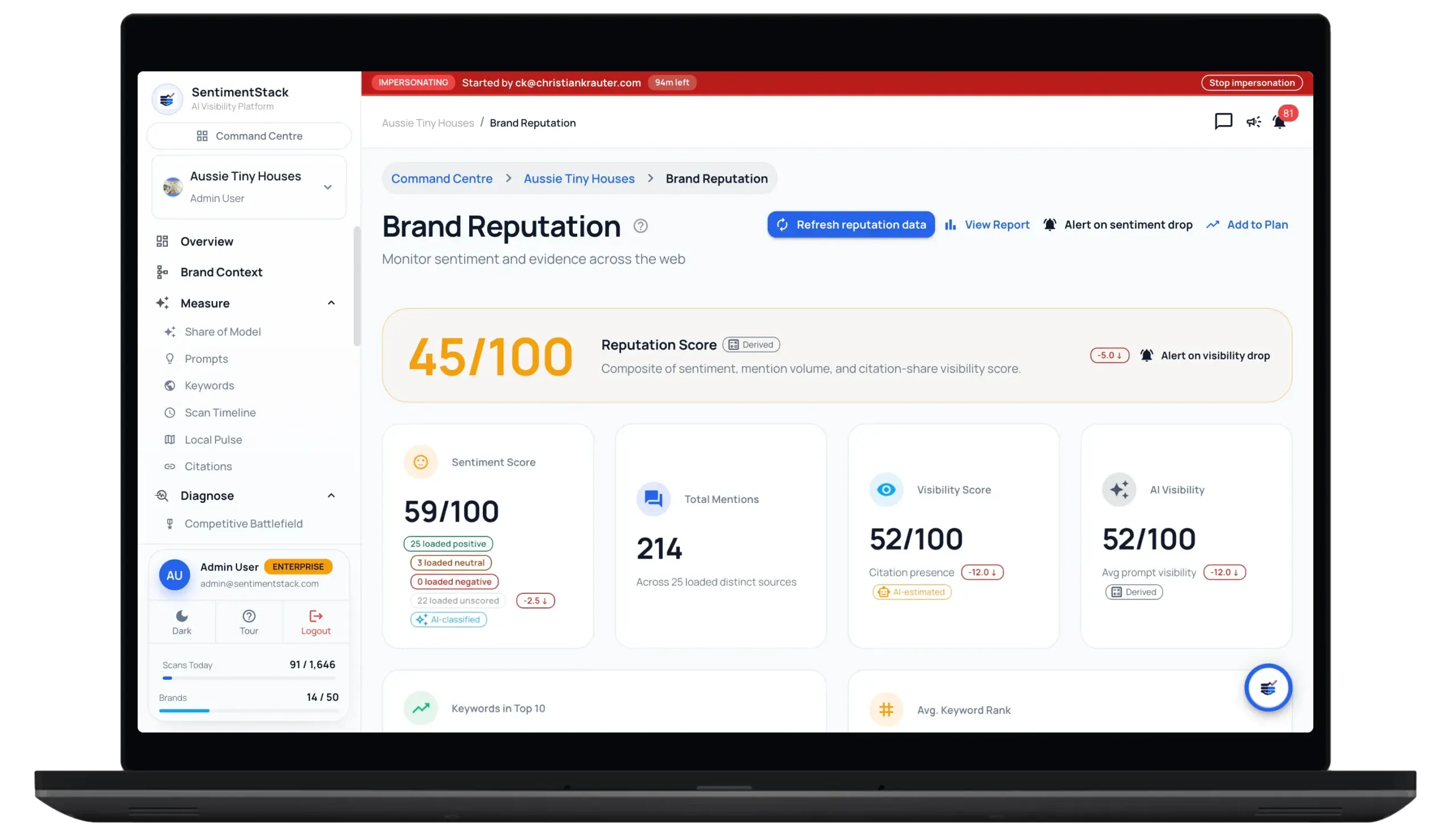
A platform such as aigeo insights turns that analysis into a working GEO roadmap, showing where mention frequency, citations and AI share of voice are lost, then prioritising the content and distribution work most likely to close the gap. The point is speed: your team needs a decision system, not another dashboard full of charts.
How to build evidence that earns inclusion
The strongest GEO programmes combine content quality, entity clarity and external validation. Begin with the pages that explain your commercial reality: what you offer, who it is for, where it operates, what it integrates with and why customers choose it. Make these pages specific enough to answer real buyer questions.
Then build decision-grade resources around high-value prompts. Comparison content should be fair and current. Use-case pages should explain implementation and outcomes rather than repeat feature lists. Product documentation should use consistent terminology and be maintained as the product changes.
At the same time, strengthen the evidence beyond your website. Encourage authentic reviews, maintain accurate directory and partner information, contribute useful expert commentary and pursue credible coverage where your expertise genuinely adds value. Do not chase mentions for their own sake. Low-quality placements and fabricated reviews are short-term tactics that can damage trust.
Finally, treat optimisation as a cycle. Test the prompts that matter, monitor shifts by platform, identify the source and content patterns behind gains, then update the roadmap. Generative engines change quickly, and competitors will not wait for your annual SEO review.
The battle for the answer has begun. Brands that make their expertise clear, their evidence credible and their performance measurable give AI a reason to include them. Brands that do not may still be searchable, but they will be absent when buyers ask the question that matters.
Related Posts
- 7 Best Content Formats for Chatbots That Get Cited
Learn which best content formats for chatbots earn AI citations, shape recommendations and help your brand win visibility across generative…
Read more about 7 Best Content Formats for Chatbots That Get Cited - LLM Analytics Review for Brands That Want Visibility
An LLM analytics review for marketers: assess AI visibility, citations, sentiment and competitors, then turn data into actions that grow…
Read more about LLM Analytics Review for Brands That Want Visibility - AI Overview Optimisation Guide for Brands
This AI overview optimisation guide shows brands how to earn citations, track AI share of voice and turn generative search…
Read more about AI Overview Optimisation Guide for Brands